Before the Pittsburgh Steelers became one of the NFL’s most successful franchises, they spent decades searching for an identity.
Then they drafted Joe Greene.
Coming in at #3 on our list of the Top 5 Defensive Linemen of All Time is the centerpiece of the legendary Steel Curtain defense and one of the most important players in the history of the Pittsburgh Steelers.
“Mean” Joe Greene did not simply join a great defense.
He helped build one.
The Beginning of a New Era
Pittsburgh selected Greene fourth overall in the 1969 NFL Draft out of North Texas State.
The timing could not have been better.
The Steelers had hired Chuck Noll as their new head coach, and Greene became the first draft pick of the Noll era.
At the time, Pittsburgh was anything but an NFL powerhouse. The franchise had existed since 1933 and had never won a championship.
Greene arrived and immediately gave the defense something it desperately needed.
He was powerful, explosive and incredibly difficult to move from the middle of the defensive line.
Greene earned Defensive Rookie of the Year honors in 1969, beginning a career that would eventually become synonymous with Steelers football.
Building the Steel Curtain
Pittsburgh continued adding talent around Greene.
Jack Ham arrived in 1971. Franco Harris joined in 1972. The legendary 1974 draft eventually delivered Lynn Swann, Jack Lambert, John Stallworth and Mike Webster.
But Greene was there first.
From his defensive tackle position, he became the foundation of what would eventually be known as the Steel Curtain.
Greene demanded attention in the middle of the offensive line. His combination of strength, quickness and aggression allowed him to disrupt running plays before they developed and collapse the pocket from directly in front of quarterbacks.
His impact went beyond statistics.
If offenses committed extra blockers to Greene, opportunities opened for Pittsburgh’s other defenders.
The Steelers gradually transformed from one of football’s struggling franchises into a legitimate contender.
And Greene was at the center of it.
Defensive Player of the Year
By 1972, Greene had established himself as one of the premier defensive players in football.
He was named NFL Defensive Player of the Year as Pittsburgh went 11–3 and reached the playoffs.
That postseason produced one of the most famous plays in NFL history: Franco Harris’ Immaculate Reception against the Oakland Raiders.
Pittsburgh’s championship breakthrough had not arrived yet, but the direction of the franchise was obvious.
Two years later, Greene was even better.
He won his second Defensive Player of the Year award in 1974, becoming one of the defining defensive stars of the decade.
That season would also change Pittsburgh forever.
The First Championship
The Steelers finished 10–3–1 in 1974 and fought their way through the postseason to reach Super Bowl IX against the Minnesota Vikings.
Pittsburgh’s defense dominated.
Minnesota’s offense managed only 119 total yards and failed to score an offensive touchdown as the Steelers won 16–6.
For a franchise that had spent more than four decades without a championship, everything had changed.
Joe Greene was now a Super Bowl champion.
And Pittsburgh was only getting started.
Four Super Bowls in Six Seasons
The Steelers returned the following year and defeated the Dallas Cowboys 21–17 in Super Bowl X.
After missing the Super Bowl in 1976 and 1977, Pittsburgh returned to the top in 1978.
The Steelers defeated Dallas 35–31 in Super Bowl XIII, giving Greene his third championship.
One year later, Pittsburgh beat the Los Angeles Rams 31–19 in Super Bowl XIV.
Four Super Bowl championships in six seasons.
Greene was part of all four.
The Steel Curtain had become one of the defining defenses in NFL history, and the franchise that had struggled for decades had become the team of the 1970s.
Dominance Beyond the Championships
The rings are an enormous part of Greene’s legacy, but reducing his career to championships would miss just how dominant he was individually.
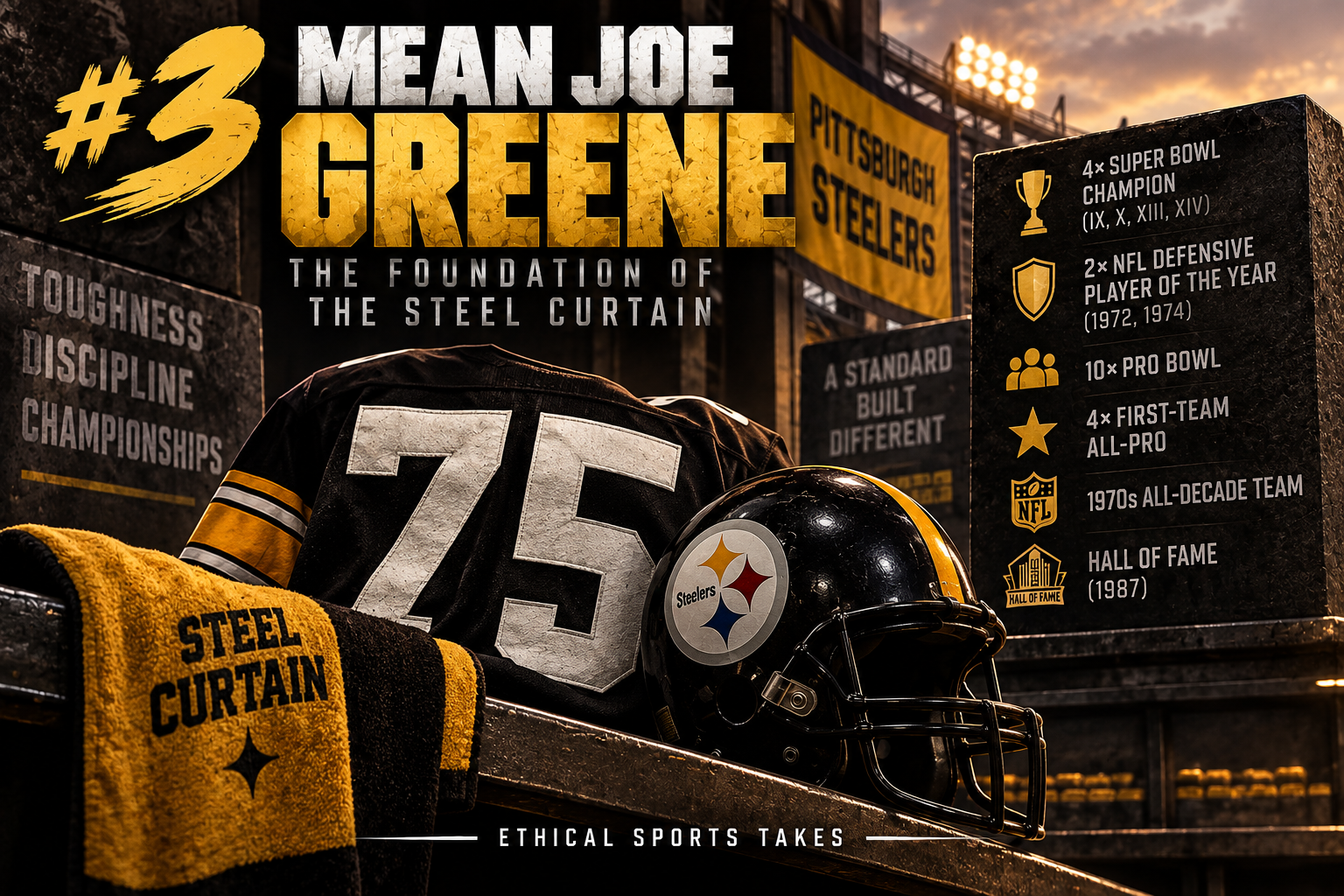
Greene earned 10 Pro Bowl selections during his 13-year career.
He was selected first-team All-Pro four times and earned two Defensive Player of the Year awards.
He was also named to the NFL’s 1970s All-Decade Team.
Official sacks did not become an NFL statistic until 1982, the season after Greene retired, which means his career cannot be evaluated through the same sack totals we can use for players such as Warren Sapp and John Randle.
Greene’s greatness was built on disruption.
He could destroy running lanes, penetrate the backfield and force offenses to change how they blocked Pittsburgh’s defensive front.
That influence helped make the entire Steel Curtain work.
Thirteen Years in Pittsburgh
Unlike Sapp and Randle, Greene never needed a second NFL home.
He spent his entire career with the Steelers.
From 1969 through 1981, Greene played 181 regular-season games for Pittsburgh.
He arrived when the Steelers were searching for their first championship and left after helping them win four.
By the time he retired, Pittsburgh’s identity had completely changed.
The Steelers were no longer an organization trying to become relevant.
They were one of the NFL’s signature franchises.
Greene had been there for the entire transformation.
An All-Time NFL Great
The honors continued long after Greene stopped playing.
He was inducted into the Pro Football Hall of Fame in 1987, his first year of eligibility.
He was selected to the NFL’s 75th Anniversary All-Time Team and later the NFL’s 100th Anniversary All-Time Team, placing him among the players chosen to represent the greatest century of professional football.
The Steelers also retired his #75, an enormous honor for a franchise with so many legendary players.
His impact became bigger than one position, one defense or even one decade.
Joe Greene became one of the players who helped define what dominant defensive football looked like.
The Foundation of a Dynasty
There were Hall of Famers everywhere on those Steelers teams.
Terry Bradshaw. Franco Harris. Lynn Swann. John Stallworth. Mike Webster. Jack Lambert. Jack Ham. Mel Blount.
But before Pittsburgh collected championships and became a dynasty, Chuck Noll’s first draft pick was Joe Greene.
That matters.
Greene helped establish the toughness and defensive identity that became inseparable from Steelers football.
He arrived in 1969.
The first championship came five years later.
By the end of the decade, Pittsburgh had built one of the greatest dynasties the NFL has ever seen.
Four Super Bowl championships. Ten Pro Bowls. Four first-team All-Pro selections. Two Defensive Player of the Year awards. NFL 75th Anniversary Team. NFL 100th Anniversary Team. Hall of Famer.
The Steel Curtain contained several legendary players, but its foundation began with #75.
That dominance, longevity and role in transforming an entire franchise are why “Mean” Joe Greene is our #3 defensive lineman of all time.
If you enjoyed the article, leave a like and subscribe to Ethical Sports Takes as we continue our Top 5 Defensive Linemen of All Time.
Leave a Reply